Buyer's Guide to Sourcing High-Volume Fasteners Without Stockouts
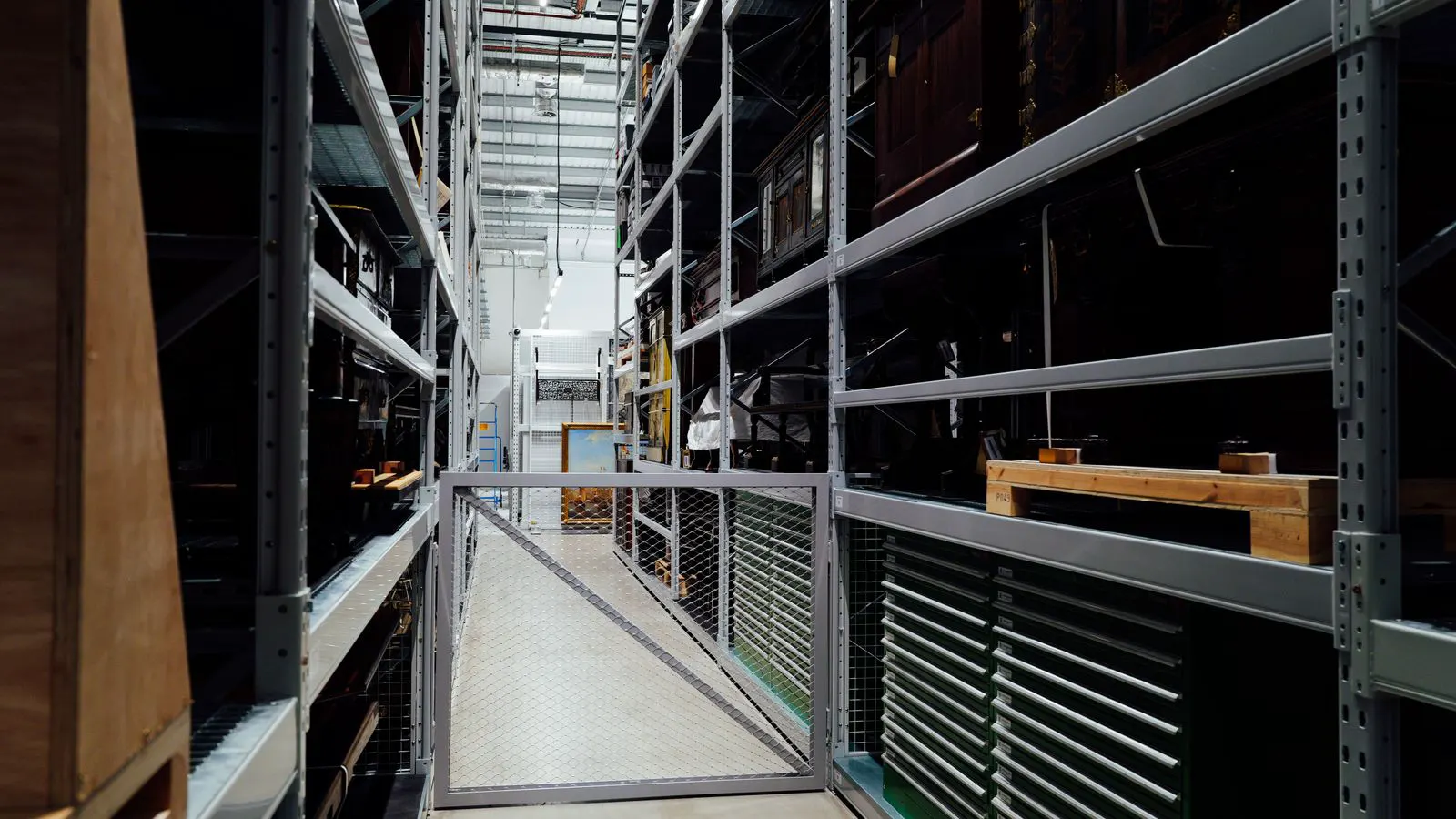
High-volume fastener procurement requires balancing bulk pricing against storage costs and cash flow. This guide details how to structure your procurement budget, manage minimum order quantities, and maintain inventory levels that prevent line stoppages while keeping capital free for other operations.
- Align bulk fastener sourcing orders with production schedules to avoid tying up capital in slow-moving stock.
- Use a tiered procurement budget that separates critical line-stop parts from standard consumables.
- Negotiate flexible minimum order quantities to match seasonal demand fluctuations without sacrificing unit price.
- Implement safety stock levels based on supplier lead times rather than arbitrary percentages.
- Review raw material contracts and coating options to stabilize costs before locking in large annual orders.
Why high-volume fastener procurement fails
Most stockouts happen because buyers treat fasteners like raw materials. They order large quantities to lock in a unit price and assume the warehouse can handle the rest. The result is a warehouse full of M10 hex bolts and a line down for a specific grade of stainless steel carriage bolt.
The core problem is that fastener demand is not uniform. A production line uses thousands of standard bolts per week. It uses a few hundred specialty washers or threaded inserts per month. Treating both with the same bulk purchase logic creates a mismatch. You overpay for the standard items by holding excess cash in storage. You under-buy the specialty items and face a two-week delay when they run out.
This guide focuses on building a procurement structure that handles this mismatch. It covers how to structure a procurement budget, evaluate supplier terms, and manage inventory levels to keep the line running.
How to structure your procurement budget
A flat budget for all fasteners creates risk. If you allocate 80 percent of your annual fastener spend to one supplier for standard items, you have no flexibility when raw material prices shift. A better approach is a tiered budget.
Split your procurement budget into three categories. Critical items include parts that stop production when missing. Standard items include high-volume fasteners like hex bolts, nuts, and washers. Low-turn items include specialty fasteners, custom lengths, or specific coating finishes.
Allocate capital based on risk, not just volume. Critical items deserve a higher safety stock buffer because the cost of a stockout exceeds the cost of holding extra inventory. Standard items can be ordered in larger cycles if the supplier has a reliable track record. Low-turn items should be ordered just-in-time or in small batches to avoid dead stock.
This structure protects your cash flow. You are not funding an entire year of standard hex bolts in one payment. You are funding the specific risk of a line stoppage for critical parts.
Consider how this plays out in a typical manufacturing environment. A plant building automotive chassis frames might classify high-tensile anchor bolts and specific torque washers as critical. The cost of a single line stoppage, including overtime and missed delivery windows, far outweighs the carrying cost of keeping two weeks of extra stock on these specific parts. Meanwhile, the standard M8 x 40 hex bolts used in thousands of assembly points per shift can be managed with a 30-day reorder point and a reliable vendor. By separating the budget, you avoid the trap of using the same financial logic for every line item. You stop treating the procurement spreadsheet as a single line item for “hardware” and start seeing it as a portfolio of different risk profiles. This distinction allows you to justify higher spend on critical items to financeers and managers who usually only look at unit price.
Evaluating supplier terms and minimum order quantities
Bulk fastener sourcing often comes with minimum order quantities that do not match your actual consumption. A supplier may require 10,000 pieces of a specific grade of bolt to offer a discounted price. If your line only uses 500 pieces per month, you are holding 16 months of stock.
Evaluate supplier terms before signing a contract. Look at the flexibility of the minimum order quantity. Can you split the order across two deliveries? Can you increase the quantity by 10 percent if demand spikes? Can you reduce the quantity during a slow season without penalty?
A supplier who offers a firm minimum but allows delivery split is a better partner than one who requires the full quantity in a single shipment. This lets you maintain the pricing benefit while reducing the storage footprint and the time cash is tied up in inventory.
Also check the pricing structure. Is the discount based on the total annual volume or the single order size? Annual volume contracts are better for standard items. Single order discounts are better for low-turn items where you do not want to commit to a long-term volume.
When you request quotes, look past the unit price. Ask about the terms of delivery. A supplier might offer a 5 percent discount on a 10,000-piece order, but require delivery in one full truckload. If you cannot store the full truckload, the discount is meaningless. You might prefer a 2 percent discount on two separate 5,000-piece deliveries over six months. The monthly cost is higher, but the cash flow impact is lower, and your warehouse staff does not have to find space for a pallet that will sit untouched for months.
Check the contract language for “make-to-order” versus “stock” items. For stock items, the supplier holds inventory, and the minimum order quantity is just a threshold for shipping. For make-to-order items, the supplier orders raw material only when you place the order. The lead time for make-to-order items is often longer, but the minimum quantity can be lower because the supplier is not holding finished goods. This distinction matters when you are evaluating low-turn items. A custom threaded insert might have a minimum of 100 pieces if it is made to order, but a minimum of 1,000 pieces if the supplier expects you to buy from their existing stock.
Managing inventory levels and storage constraints
Warehouse space is a finite resource. A pallet of M8 bolts takes up the same cubic space as a pallet of custom titanium pins, but the pins may be worth ten times more. You must account for storage cost in your total cost of ownership.
Calculate your storage cost per pallet per month. Include rack space, labor for put-away and pick, and insurance. If holding a large order of standard fasteners costs more than the savings from the bulk discount, the order is not profitable.
Set safety stock levels based on supplier lead time. If a supplier takes 30 days to deliver standard hex bolts and your line uses 500 per day, your safety stock should cover 30 days of usage plus a buffer for lead time variability. Do not guess this number. Use your historical consumption data.
For critical items, the buffer should be larger. If a supplier takes 45 days and has a history of delays, your safety stock must cover the 45 days plus the delay window. This is expensive, but it prevents the line from stopping.
Consider the physical layout of your warehouse. If your racks are full, adding a bulk order of standard bolts may force you to rent additional space or move other items. The labor cost to move those items can be significant. If you have a dedicated fastener room, you can model the cost of adding a new SKU. Each new SKU requires a bin, a label, and a system entry. If a low-turn item is only used once a quarter, it may not justify a dedicated bin. Instead, group it with related items in a shared storage area. This reduces the administrative overhead and the physical footprint.
Also consider the shelf life of coated fasteners. Some coatings, particularly certain types of zinc plating or chromate conversion, can degrade if stored in a humid environment for years. If you buy a two-year supply of these items, the stock at the end of the period may not meet the required coating thickness. For these items, a shorter reorder cycle is often better than a bulk purchase, even if the unit price is higher. You pay a premium for freshness and reliability.
Negotiating price and quantity without over-committing
Negotiation is not just about getting a lower unit price. It is about getting a pricing structure that fits your production reality.
Start by sharing your consumption forecast. Suppliers are more likely to offer better terms if they can see the full picture. Show them your monthly usage for the next six months. Highlight the seasonal peaks and troughs.
Ask for a tiered pricing model. For example, a base price for orders under 5,000 pieces, a reduced price for 5,000 to 10,000 pieces, and a further reduction for orders over 10,000. This lets you order in smaller batches during slow months and take the discount during peak production.
Avoid locking in a fixed price for more than a year. Raw material costs change. If you lock in a price for three years and steel prices drop, you are overpaying. If they rise, you are protected, but you may have taken on a supplier who cannot keep up with market changes. A one-year contract with a price adjustment clause is safer.
When you present your forecast, include the variability. If your production schedule fluctuates between 800 and 1,200 units per month, show that range. Do not present a single average number. A supplier who sees a stable, predictable volume is more likely to offer a lower base price because they can plan their raw material purchases and production schedules with greater accuracy. If your forecast shows high variability, the supplier may charge a higher base price to cover the risk of idle capacity. You can then negotiate a tiered structure that rewards you for hitting higher volume thresholds during peak months.
Avoid negotiating solely on the last invoice price. Look at the total cost. If Supplier A is 2 percent cheaper on the unit price but has a 45-day lead time, and Supplier B is 1 percent more expensive but has a 15-day lead time, the total cost may favor Supplier B. You need to hold less inventory with Supplier B. You may need a second source for Supplier A to cover the lead time risk. The negotiation should include these logistical factors, not just the number on the price sheet.
Checking quality and coating consistency
A bulk order is only as good as the parts inside it. A 10,000-piece order of hex bolts may arrive with 95 percent good parts and 5 percent that are undersized or have poor coating adhesion.
Before the bulk order, require a sample inspection. Test the sample for the specific properties your line requires. For structural applications, verify the tensile strength. For corrosion resistance, check the coating thickness and salt spray results.
Include a quality penalty clause in the contract. If the delivery does not meet the specified grade or finish, the supplier must replace the non-conforming parts at their cost. This protects your production schedule.
Do not assume that a standard grade is uniform across all suppliers. A bolt marked as a common standard may vary in thread tolerance or head height. Specify the exact standard and tolerance in your purchase order.
When you request samples, ask for a sample from a different heat lot or production batch than the one that will ship with the bulk order. Suppliers sometimes use their best stock for samples. The bulk order may come from a different production run with different tolerances. If the sample passes but the bulk order fails, you want to know that the supplier has a process for ensuring consistency across batches, not just for the sample.
Include specific inspection criteria in the purchase order. Do not just write “check quality.” Write “verify thread engagement on 10 percent of the sample,” or “check coating thickness on 5 pieces.” If the supplier does not have the equipment to perform these tests, they should pass the cost to you or refuse the order. A supplier who cannot verify the quality they are selling is a risk. You need a supplier who has a quality control process in place before the parts leave their warehouse.
Also check the documentation. A bulk order should come with a material test certificate or a mill test report. For critical structural fasteners, this document is essential. It proves that the raw material was tested and meets the specified chemical and mechanical properties. Without this document, you are relying on the supplier’s word. In a dispute, the document is your proof. Make it a condition of payment.
Decision checklist
- My procurement budget is split into critical, standard, and low-turn categories.
- Critical items have safety stock levels based on supplier lead time and historical delay data.
- Standard items are ordered in cycles that match consumption, not just annual volume.
- Low-turn items are ordered in small batches or just-in-time to avoid dead stock.
- Supplier contracts allow for split deliveries or flexible minimum order quantities.
- Pricing is tiered by order size, not locked in for multi-year periods.
- Bulk orders include a sample inspection before the full delivery.
- Contracts include a quality penalty clause for non-conforming parts.
- I have calculated the storage cost per pallet and compared it to the bulk discount.
- I have a backup supplier for at least one critical fastener category.
Frequently asked questions
Can I use a single supplier for all my fastener needs?
Relying on a single supplier increases your risk of a stockout. If they have a quality issue or a shipping delay, your entire production line stops. Use a primary supplier for standard items and a secondary supplier for critical parts.
How do I know if my safety stock level is too high?
If your safety stock is not being used during normal operations, it is likely too high. Review your consumption data every quarter. If you have not needed the buffer stock, reduce it to free up cash and warehouse space.
Should I buy fasteners in a foreign currency to hedge against price changes?
This is a complex financial decision that depends on your overall exposure. Consult your finance team before committing to currency hedges. For most industrial buyers, a one-year contract with a price adjustment clause is a simpler and safer approach.
What is the best way to handle custom fasteners?
Do not try to bulk buy custom fasteners. They usually have long lead times and high setup costs. Order them in small batches that match your specific production run. Keep a small buffer for the most critical custom parts.
How often should I review my fastener procurement strategy?
Review it at least twice a year. Raw material prices, supplier capacity, and your production schedule all change. A semi-annual review ensures your budget and inventory levels still match your operational reality.


